
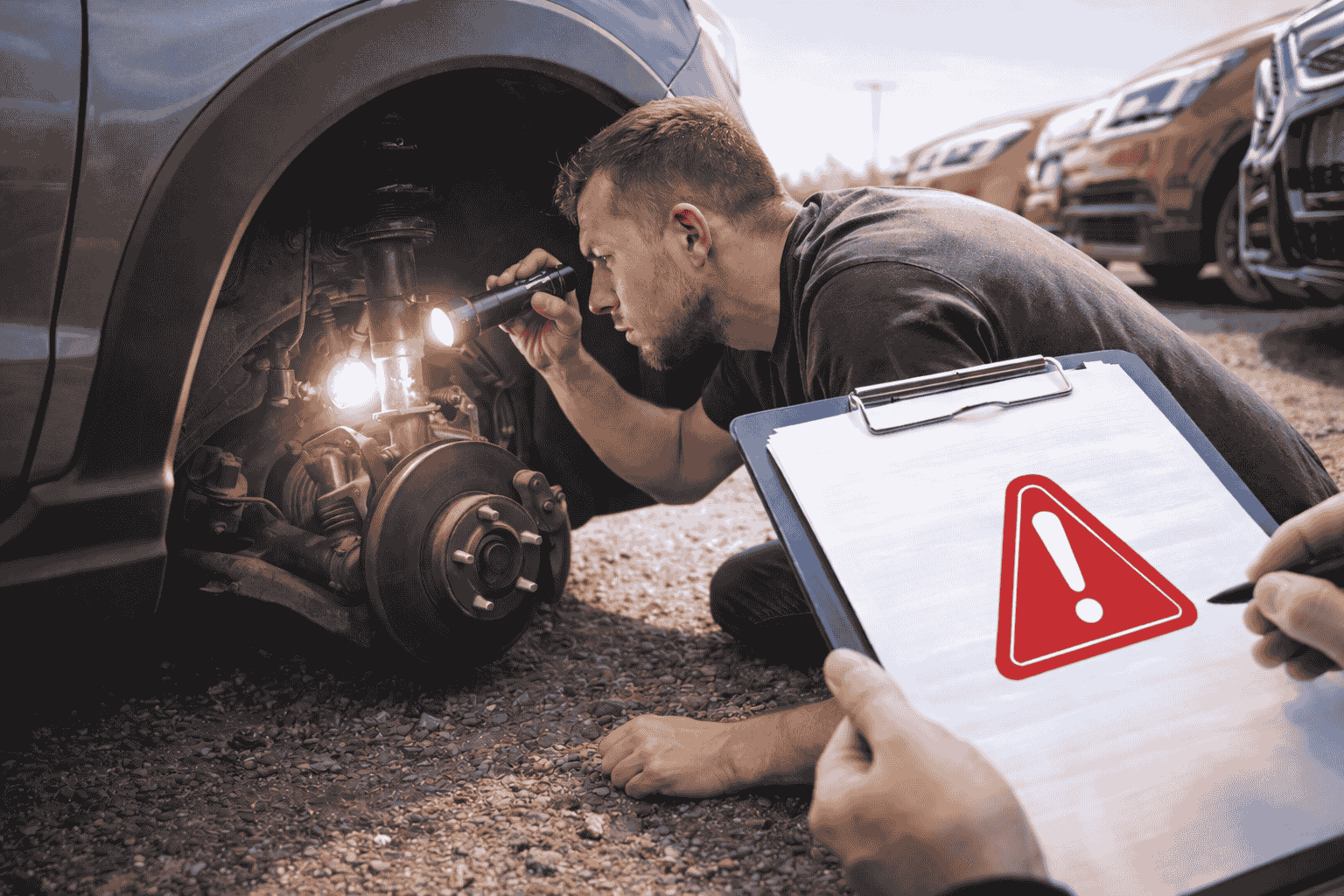
The biggest red flags when buying a used car in 2026 are “ghost” electrical faults, hidden frame corrosion from road salt, and missing service records that void future warranty claims. Identifying these early can save you from a “lemon” that costs $4,000 in immediate repairs.
Key Takeaways:
- The “Clear Code” Scam: Dashboards often show no lights if the car hasn’t been driven; codes may have been manually cleared.
- Modular Wear: Check if power sliding doors or liftgates “stutter”—these are $2,000+ repairs waiting to happen.
- Salt Scarring: Surface rust is fine; structural “scaling” on suspension mounting points is a deal-breaker.
- Fluid “Milking”: Check the oil cap for white residue, a sign of head gasket issues or extreme winter condensation.
Buying used shouldn’t be a gamble. While the exterior might look pristine, modern vehicles are “computers on wheels,” and the most expensive problems are often invisible to the naked eye.
1. Electronic Stability and ADAS
Test every safety sensor. If the lane-keep assist or adaptive cruise control feels jerky during the test drive, the sensors likely need recalibration or replacement. This is a “high-tech tax” that many used car buyers overlook—a single sensor replacement can cost over $1,500.
2. The Service History “Gaps”
A missing oil change record might seem minor, but it can lead to problems down the road. Always ask for a complete digital service record. If the seller can’t provide it, walk away or ensure you have an Obvi plan to bridge the gap and lock in protection.
3. Suspension and Pothole Damage
Listen for clunks. Canadian roads are brutal, and a used car with “fresh” tires might be hiding a bent control arm or a leaking strut. During the test drive, turn the radio off and listen to how the car handles bumps; any “hollow” thumping sounds are a major red flag.
4. The “Musty” Interior Smell
If the car smells like damp laundry, it could be a sign of a clogged sunroof drain or worse—flood damage. Water entering the cabin destroys the delicate wiring harnesses located under the carpet, leading to intermittent electrical gremlins that are nearly impossible to fix.
5. Rapid Battery Degradation (The EV/Hybrid Trap)
If you are looking at a used Hybrid or EV, pay close attention to the “State of Health” (SoH) of the battery. A common red flag is a seller who presents the car with a 100% full charge, which can mask a battery that drains unnaturally fast once you hit highway speeds. If the estimated range drops by 20% after only 5 minutes of driving, the battery cells are likely failing. Replacing a lithium-ion pack is the ultimate “hidden cost” in 2026, often exceeding $8,000, making a pre-purchase battery diagnostic or an Obvi protection plan essential for any electrified vehicle.
Buying used shouldn’t be a gamble. Add an Obvi protection plan to your used vehicle purchase and skip the dealership’s high-pressure (and high-priced) upsell. Get Your 60-Second Quote
FAQ: Used Car Buying
Q: Can I add a warranty after I’ve already bought the car?
A: Yes! You can add Obvi coverage even months after your purchase, provided your vehicle meets the eligibility requirements.
Q: Does a private sale affect warranty eligibility?
A: No. Whether you buy from a dealer or a private seller, you can still protect your investment with Obvi.
Q: How do I know if a used car is “eligible” for coverage?
A: Our online quote tool will tell you instantly based on your make, model, and mileage.