
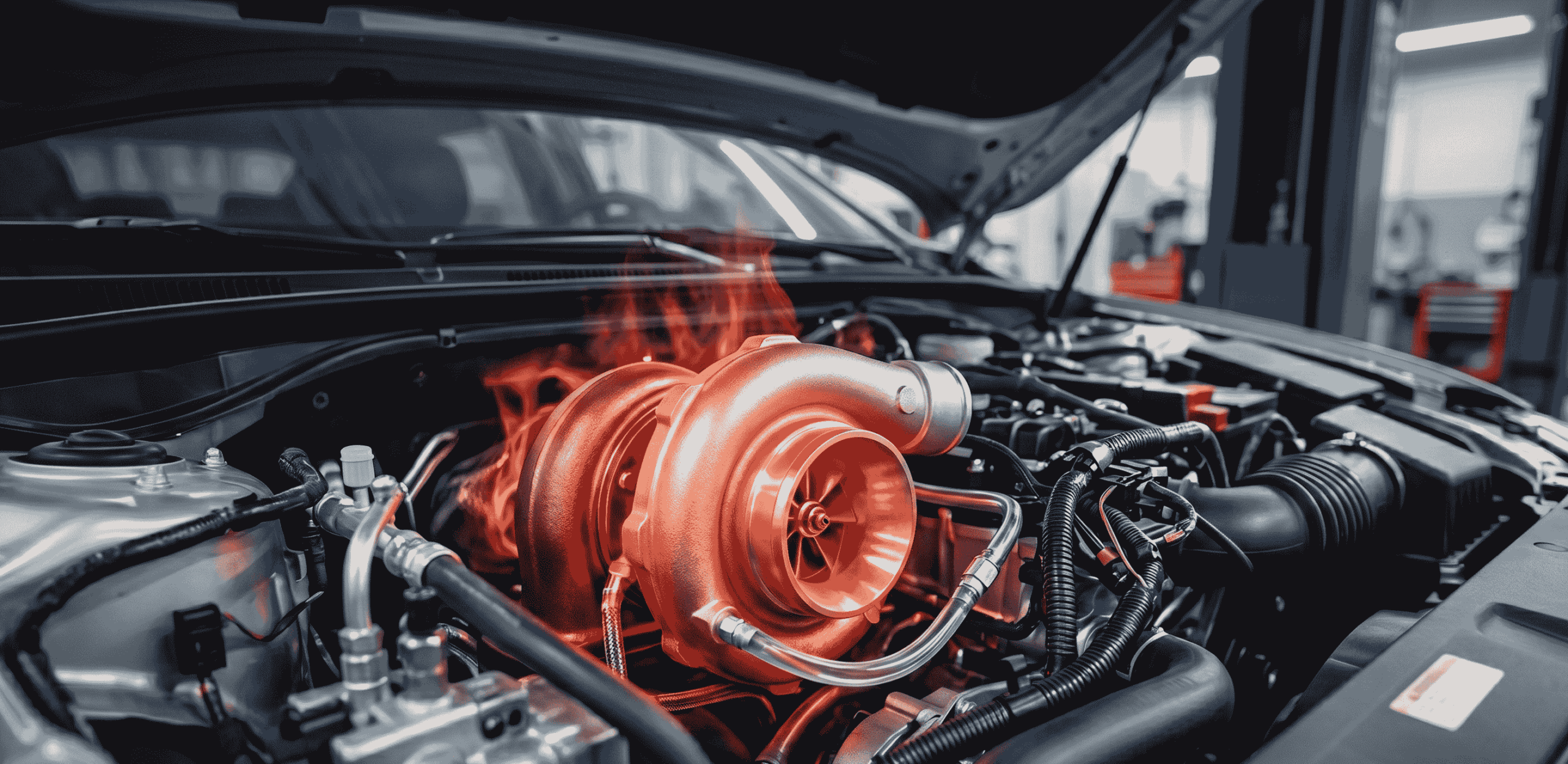
Turbochargers are now standard equipment in most Canadian vehicles to improve fuel efficiency, but they operate under extreme heat and pressure that can lead to sudden, expensive failures if lubrication isn’t perfect. A failed turbo can send metal debris into your engine, turning a $3,000 part replacement into a $10,000 engine overhaul.
Key Takeaways:
- Extreme Temps: Turbos spin at over 200,000 RPM and operate at temperatures high enough to glow red.
- Oil Sensitivity: Small clogs in oil lines can starve a turbo of lubrication in seconds, causing catastrophic bearing failure.
- Intercooler Issues: If the air cooling system for the turbo leaks, your engine will lose power and waste fuel.
- Electronic Wastegates: Modern turbos use complex electronics to control pressure; if the sensor fails, the whole unit often needs replacement.
Ten years ago, turbos were for sports cars. In 2026, they are in almost every SUV and sedan on the road. While they provide great power, they are high-maintenance components that require a specific kind of protection.
1. The Heat Soak Problem
When you shut off a turbocharged engine after a long drive, the oil sitting in the turbo can bake or carbonize due to the extreme heat. Over time, this creates sludge that restricts oil flow. Without a constant supply of fresh oil, the turbo’s internal shaft will snap or seize. This is a common failure point that Obvi’s Elite Plan is designed to handle.
2. Complexity of Repair
In modern downsized engines, the turbocharger is often tucked deep behind the engine block. Replacing it isn’t just about the part; it’s about the 8 to 12 hours of labour required to reach it. Most dealerships will charge between $180 and $250 per hour for this specialized work.
3. Sensor and Boost Leaks
Modern turbos rely on a network of sensors to manage boost pressure. A failure in a boost pressure sensor or a cracked plastic intake pipe can trigger a Limp Mode that leaves you with almost no power on the highway. These are primarily electrical and sensor-based failures, which is why comprehensive coverage is vital.
Keep your performance high and your repair bills low. Protect the most hardworking part of your engine today. Get Your 60-Second Quote
FAQ: Turbocharger Coverage
Q: Is the turbocharger covered under a Powertrain plan?
A: Yes, in most cases, the turbocharger is considered a core part of the engine assembly and is covered.
Q: How can I make my turbo last longer?
A: Always use full synthetic oil and let your car idle for 30 seconds before shutting it off after a long or spirited drive to let the turbo cool down.
Q: What are the signs of a failing turbo?
A: Look for blue smoke from the exhaust, a loud whining or siren noise, and a significant loss of acceleration.